DATE OF IMPLEMENTATION
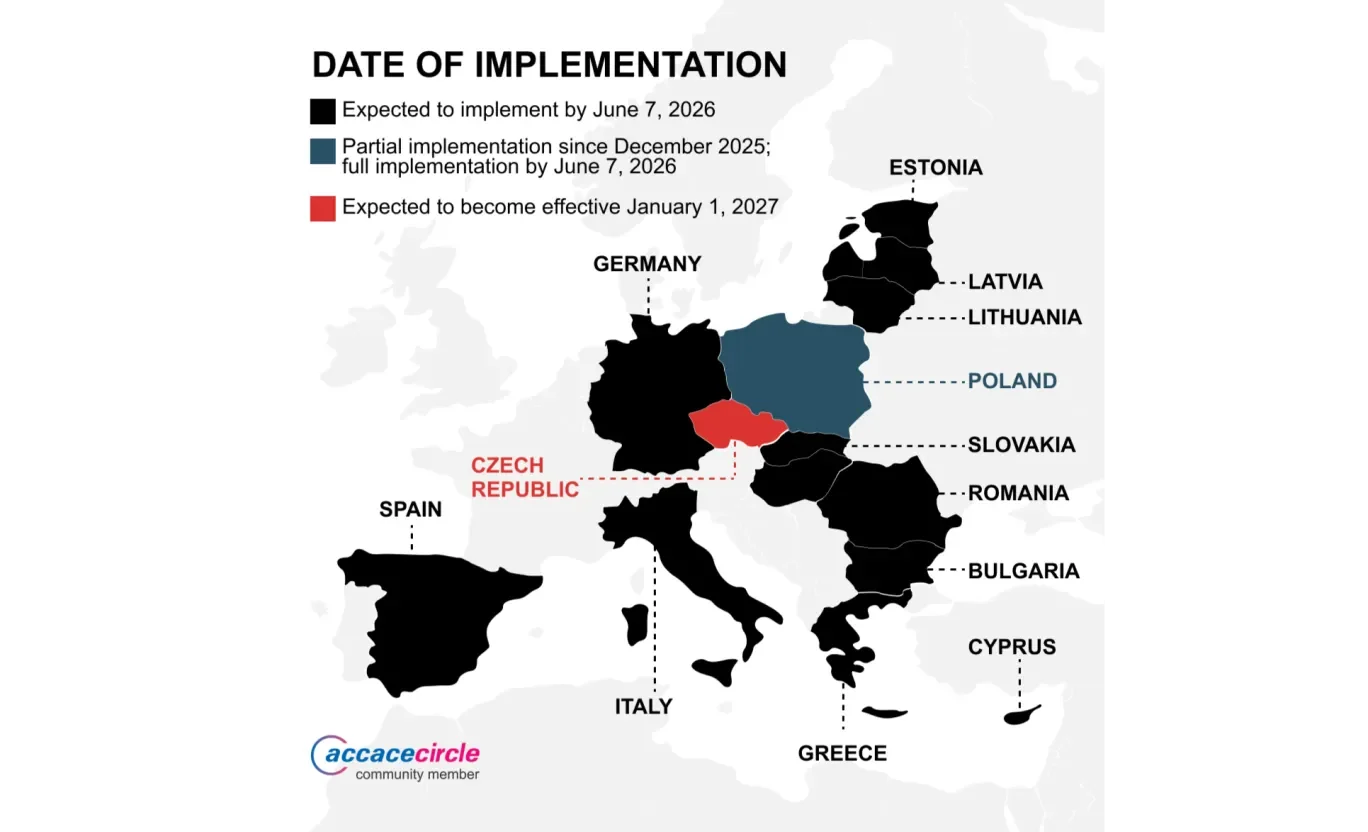
Most countries are working toward the same target date: June 7, 2026. The Czech Republic is expected to follow later, from January 2027. Meanwhile, Poland has already introduced selected transparency measures in recruitment since December 2025, with full implementation expected by mid-2026.
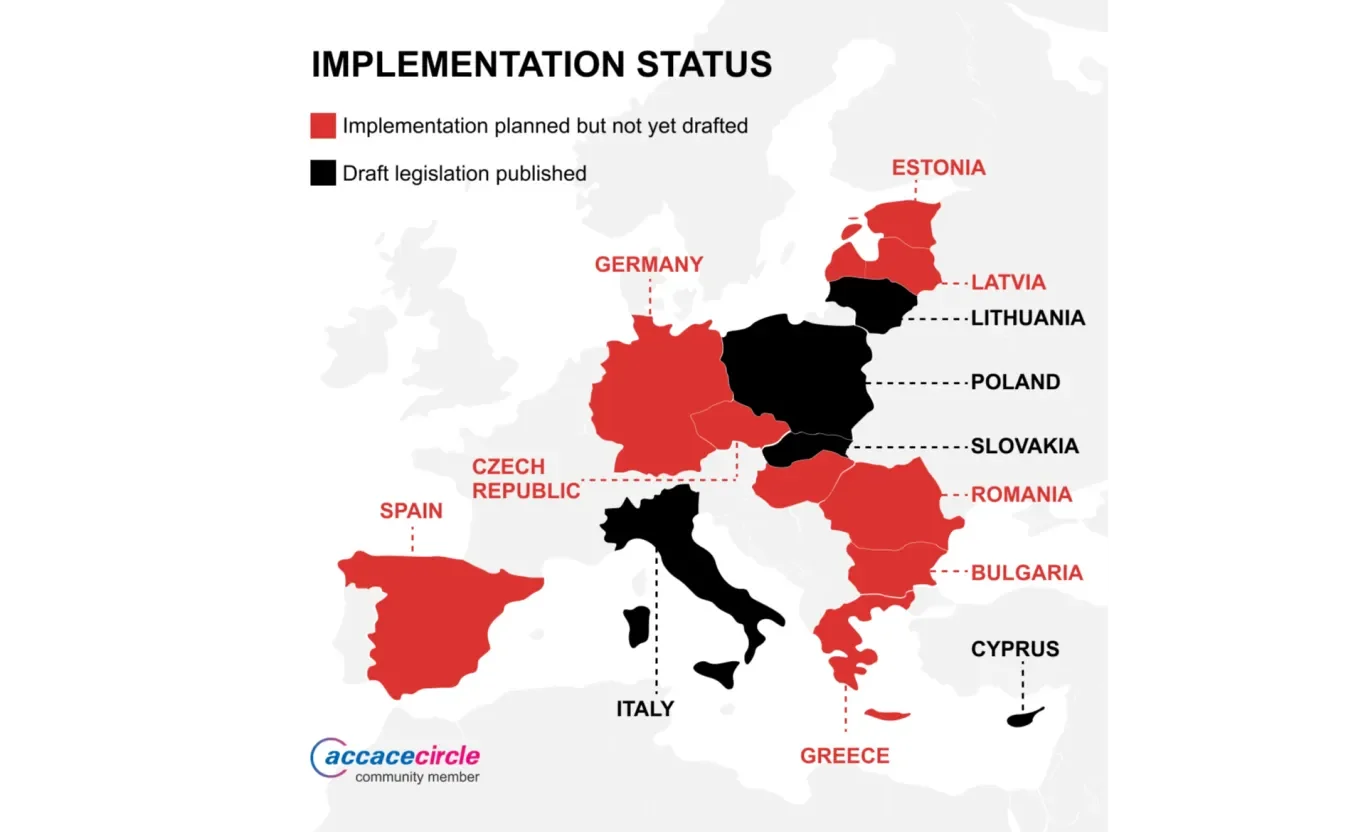
When comparing progress, the gap between countries becomes clear. A larger group including Bulgaria, Czech Republic, Estonia, Germany, Greece, Hungary, Latvia, Romania and Spain is still in the early phase, with implementation expected but no draft legislation published yet. In contrast, Cyprus, Italy, Lithuania, Poland and Slovakia have already taken more concrete steps, either publishing draft laws or introducing parts of the framework.
NATIONAL DIFFERENCES, REPORTING OBLIGATIONS AND PENALTIES
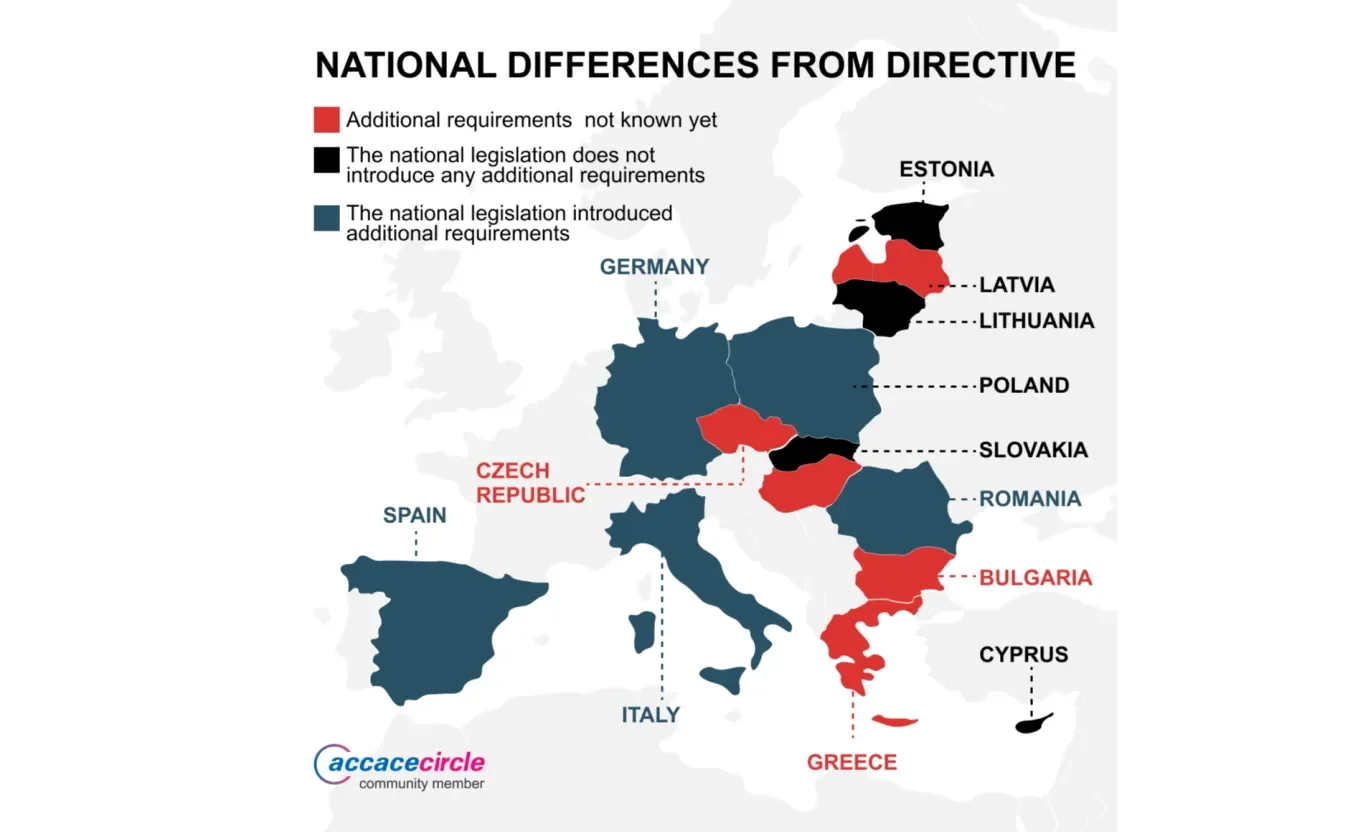
This difference is also reflected in how countries are shaping their national rules. In Bulgaria, Czech Republic, Greece, Hungary and Latvia, it is still unclear whether national legislation will go beyond the EU baseline. Meanwhile, Cyprus, Estonia, Lithuania and Slovakia are expected to follow the directive without major additions. On the other hand, Germany, Italy, Poland, Romania and Spain are already working with more detailed or stricter requirements.
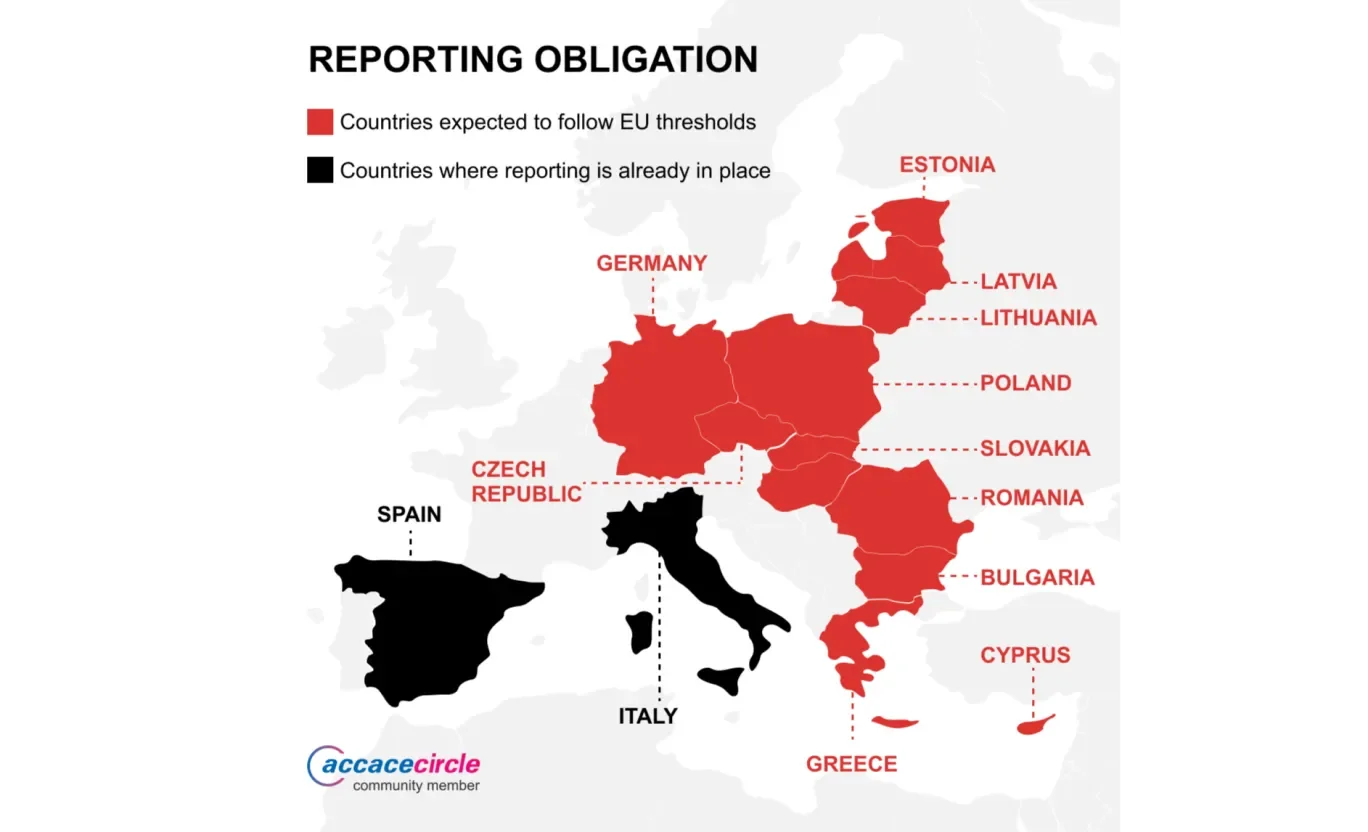
Reporting obligations are expected to follow a similar timeline across most countries, with 2027 as the starting point. The exception is Italy and Spain, where reporting or salary transparency systems are already in place, meaning employers are not starting from scratch.
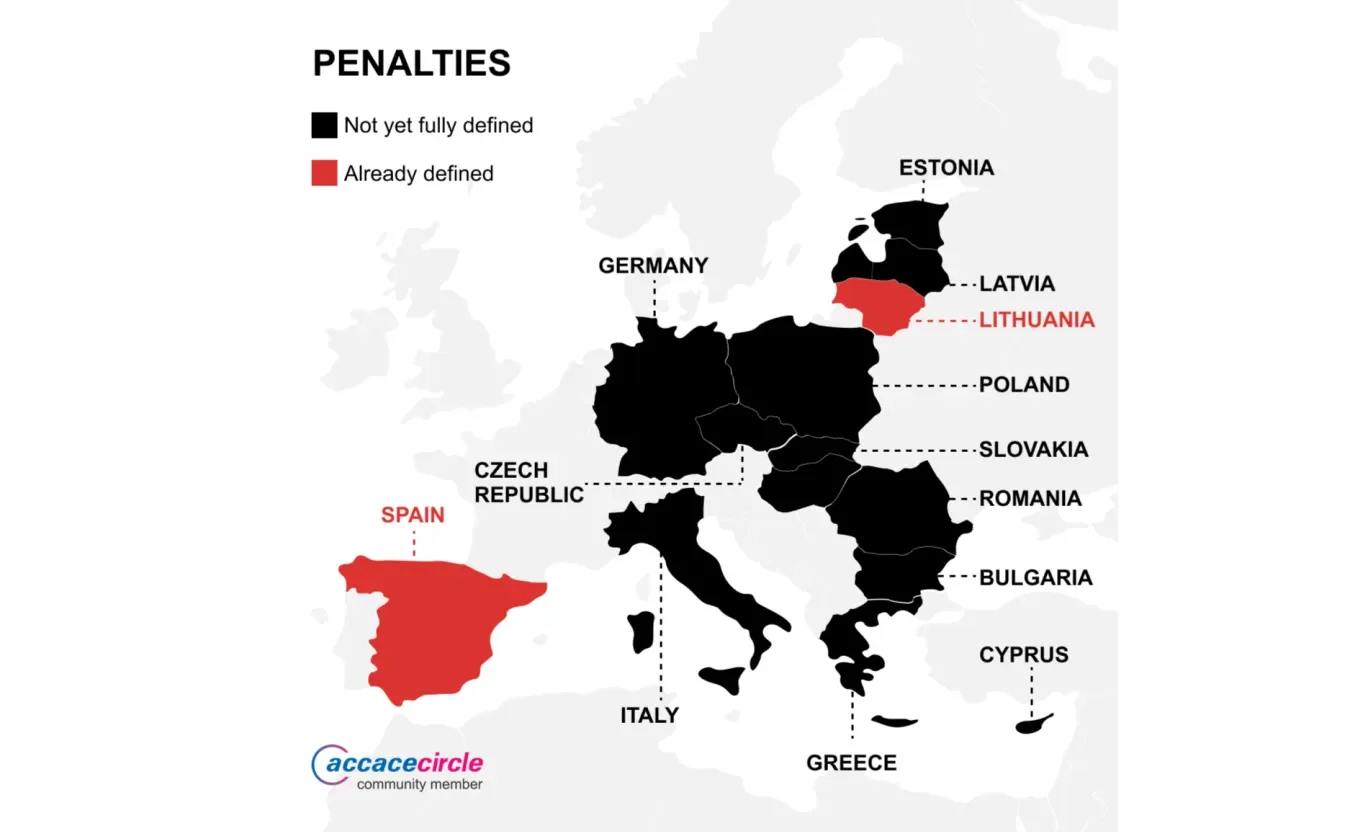
The same pattern applies to penalties. In most of the analyzed countries, the final enforcement framework is still being finalized. However, Lithuania and Spain already provide a clearer picture of what to expect, including defined fines, corrective obligations and reputational consequences.
Overall, the direction is consistent, but the level of progress is not. For employers, this means that preparation will depend heavily on where they operate and how quickly local rules are finalized.
Explore and download the full infographic for a complete overview of all 14 countries or read how the Baltics are implementing it in Estonia, Latvia and Lithuania.
FROM LOCAL TO GLOBAL: YOUR EXPERT GUIDE FOR CROSS-BORDER GROWTH
This infographic is brought to you by the Accace Circle business community. Access practical insight from industry experts across 60+ countries within Accace Circle, shared through ongoing webinars, podcasts and publications, to support your international expansion.
Data in this infographic reflects the status as of March 31, 2026 and is for informational purposes only. It does not constitute legal advice.